Your first fitness tracker should be something you reach for without thinking, not a gadget you charge every night and quietly resent. The category makes that harder than it needs to be: bands, watches and rings, each promising recovery scores, sleep stages and stress readings. Strip away the marketing and the decision comes down to four things — what the sensors can genuinely measure, how long the battery lasts, whether you will wear it comfortably all day and night, and what you are willing to spend. Work through those in order and the shortlist builds itself.
Almost every wearable in this class relies on the same handful of components. An accelerometer counts steps and detects movement, which is also how most sleep tracking works. An optical heart rate sensor shines light through your skin and reads the changes in blood flow. A barometer or altimeter estimates elevation, GPS records where you went, and some models add skin temperature or blood oxygen readings.
For a beginner, four of those matter: heart rate, steps, sleep and GPS. Everything else is a bonus you can safely ignore for now.
Accuracy deserves an honest word. Wrist-based heart rate is decent at rest and during steady runs, but it struggles with intervals, cold hands, tattoos and a loose strap. If you care about precise training zones, budget for a chest strap — most watches pair with one. Blood oxygen and skin temperature readings on a wrist device shift for all sorts of reasons; treat them as trends to glance at, not measurements to act on.
Two numbers tell you most of the story: days per charge in normal use, and hours of continuous GPS. A casual runner doing three 5Ks a week has no need for 30 hours of GPS. Someone hiking all day in the hills does. Always-on displays and overnight oxygen sampling will quietly cut battery life, so check whether those can be switched off.
The charging routine matters as much as the figure. A watch that tops up in an hour while you shower is easy to live with. One that needs three hours on a proprietary cradle will spend more time on your dresser than on your wrist.
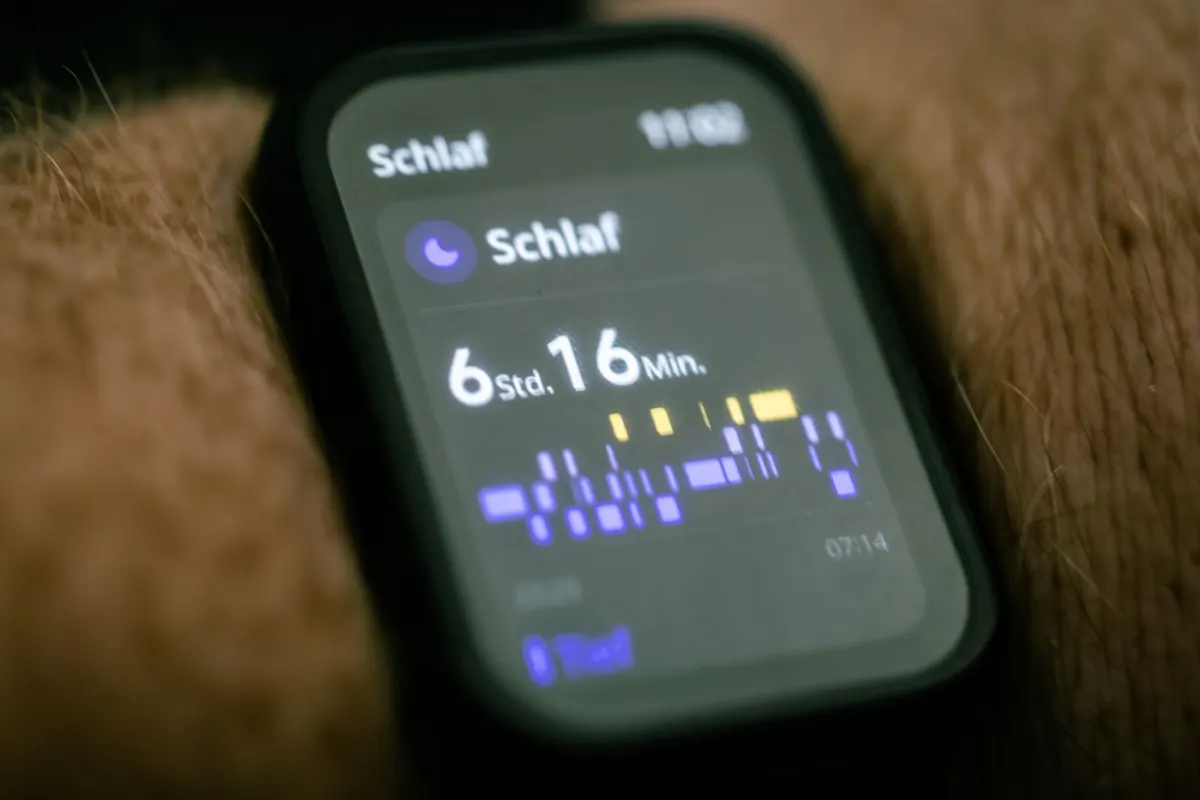
Sleep tracking only works if the thing is on your arm at 2 a.m. Weight, band material and clasp design all shape that experience. A chunky metal watch feels very different overnight from a soft band weighing a fraction as much. Silicone is durable and easy to clean but can trap sweat; woven nylon breathes better and dries slowly. Metal looks sharp and slides around during sleep.
If you can, try one on and wear it for an evening. Ten minutes in a shop tells you more about fit than any review.
Do you want a screen? Simple bands show the time, steps and a heart rate with a tap. A larger display adds notifications, workout stats at a glance, music controls and sometimes maps and contactless payments. That convenience is real, but it costs battery life and money.
Check phone compatibility first. Some watches work only with iOS or only with Android, and a few need a specific app to set up at all. Then look at the app itself — search for recent reviews about syncing, exporting data and how quickly the company fixes bugs. Hardware gets the attention; software is what you use daily.
Subscriptions are the quiet cost. On some platforms your history, detailed sleep analysis or guided programmes sit behind a monthly fee. Decide whether you would pay it before you commit to the device.
Think in tiers rather than prices. Entry-level devices handle steps, heart rate, basic sleep and phone-connected GPS, which is plenty if you carry your phone on walks and runs anyway. Mid-range models add built-in GPS, better sleep detail and longer battery life. Premium devices bring multi-band GPS, offline maps, advanced materials and more sensors — worth it only if you have a specific reason.
The rule is simple: pay for the sensors you will use weekly, and refuse to pay for the ones you will admire once and forget.
Readiness scores, stress scores, estimated VO2 max and calorie counts are all derived from the same raw signals, and they vary between brands and change with software updates. They can be motivating, but they are not measurements of your health. Features marketed around heart rhythm or blood pressure are wellness tools, not diagnostic devices, and no wearable replaces a clinician. If you have a heart condition, are pregnant, or are starting a new training plan after illness, speak to a medical professional before relying on any device's numbers.
Then give it a fair trial: one full week, including two nights of sleep, one hard workout and one long day out. If the strap rubs, the battery annoys you, or the app frustrates you, return it and try again. The best tracker for a beginner is not the one with the longest feature list. It is the one that stays on your wrist, keeps working and tells you something you can act on.
Photo: indraprojects / Pixabay